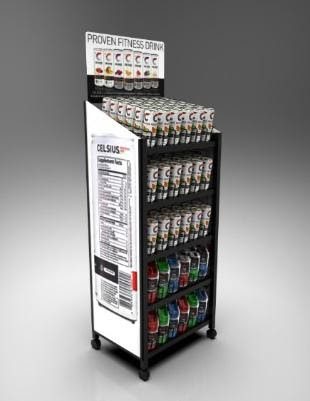
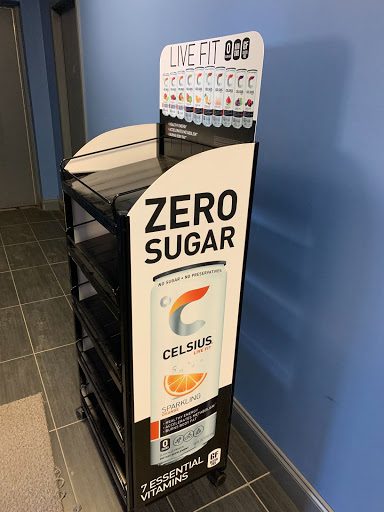
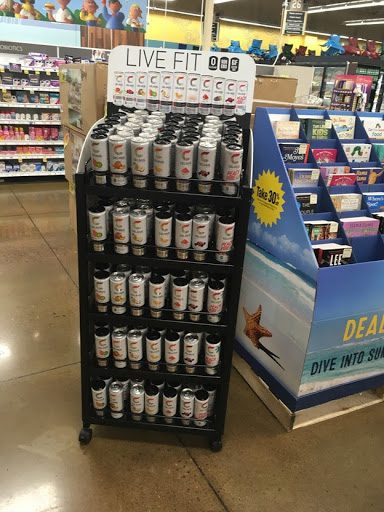
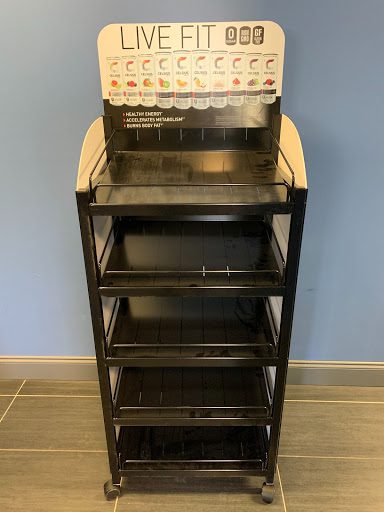
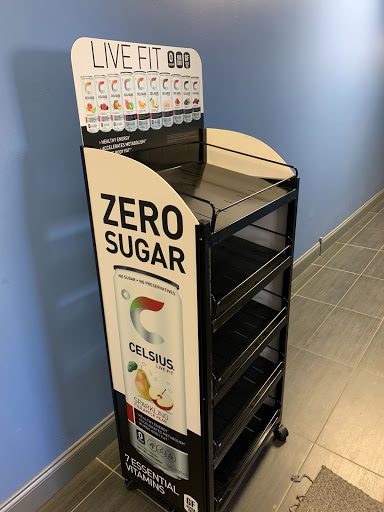
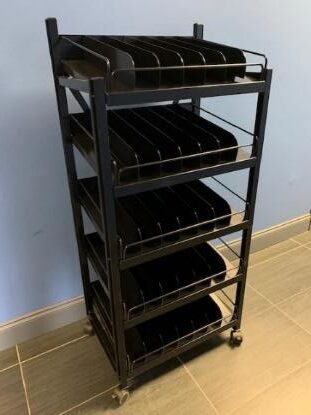
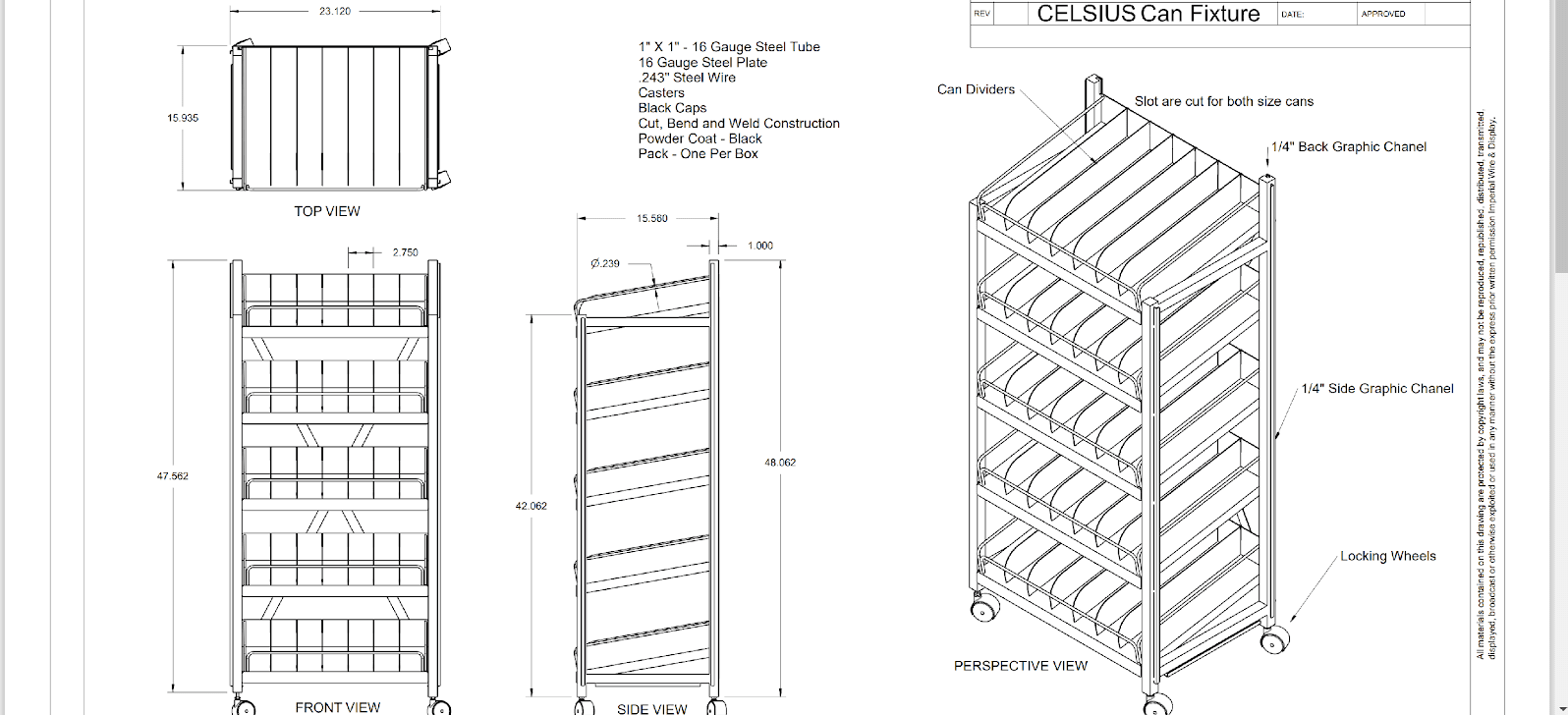
Celsius asked us to design and manufacture a gravity-fed racking system for their energy drink line in Kroger grocery stores. The wide-scale nature of the distribution meant that the fixtures would need to accommodate a variety of price points, shipping costs, packaging styles, and SKU and count requirements while requiring minimal instructions and tools to facilitate ease of assembly. We created a solution that included an angled, auto-racking shelf and design options with custom, interchangeable graphics.
The core difficulty wasn’t simply building a drink rack — it was designing a system capable of scaling to 1,500 units across the largest grocery chain in the United States while remaining cost-effective, easy to assemble at store level, and flexible enough to accommodate multiple SKU formats and packaging styles. The solution needed to perform consistently across hundreds of locations without relying on specialized labor or complex instructions.
Standard drink racking systems are built for uniform packaging and fixed SKU configurations. Off-the-shelf gravity-fed units lack the customization required for brand-specific graphics or variable SKU counts, and generic knock-down designs often introduce assembly complexity that creates inconsistency at store level. A solution that could handle Kroger’s scale — with near-perfect field placement rates — required a purpose-engineered system, not an adapted standard product.
Working directly with the Celsius team, the fixture was designed around an angled, auto-racking shelf system that uses gravity to keep product fronted and accessible without manual intervention. The knock-down configuration was engineered to minimize shipping volume while keeping assembly straightforward for store associates. Custom interchangeable graphic panels allowed Celsius to localize messaging and adapt to promotional needs without fixture replacement. Every component was specified for durability under the conditions of a high-traffic grocery environment — including repeated restocking cycles and customer interaction. For a deeper look at how this type of solution moves from concept to rollout, see How Retail Fixtures Are Designed, Engineered, and Rolled Out.
Fixtures were designed for knock-down shipping to reduce logistics costs across a 1,500-unit order. Assembly was engineered to require minimal tools and no technical expertise, allowing store associates to install units without vendor support. Interchangeable graphic panels were standardized across the system, enabling Celsius to update branding or promotional content at the store level without requiring fixture replacement or outside assistance.
By engineering around the operational and logistical realities of a 1,500-unit rollout to a national grocery chain — not just the display brief — Imperial delivered a fixture that performed for both the Celsius brand and the store teams responsible for installation. The combination of gravity-fed auto-racking, tool-minimal assembly, and interchangeable graphics created a system that was as easy to manage in the field as it was effective on the floor.



This website uses cookies to ensure you get the best experience on our website.